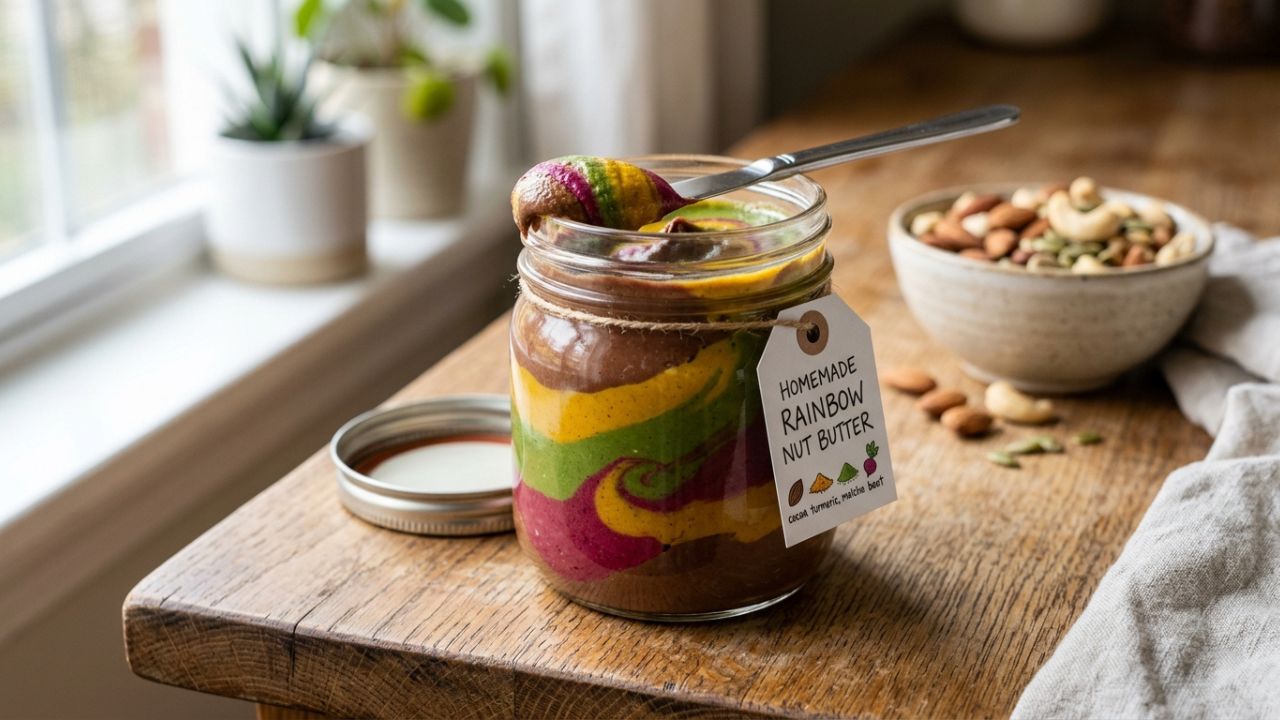
Rainbow nut butter is a creative twist on traditional nut spreads that turns an everyday pantry staple into something visually beautiful and surprisingly enjoyable to make at home. At its core, it is still a smooth blend of roasted nuts, but instead of keeping it one uniform color, the butter is divided into sections and naturally tinted with ingredients like cocoa, turmeric, matcha, or beet powder. These different portions are then layered or swirled together to create a soft rainbow effect in a jar. What makes this preparation interesting is that it doesn’t change the essence of nut butter—it only adds variation and personality. The taste remains rich, creamy, and nutty, but each spoonful can offer a slightly different note depending on which layer you scoop. It’s the kind of recipe that encourages slowing down in the kitchen and enjoying the process rather than rushing through it.
In my own experience, recipes like this often become less about perfection and more about small creative choices. Even the way you layer the colors can change how it feels when you open the jar in the morning.
What Is Rainbow Nut Butter
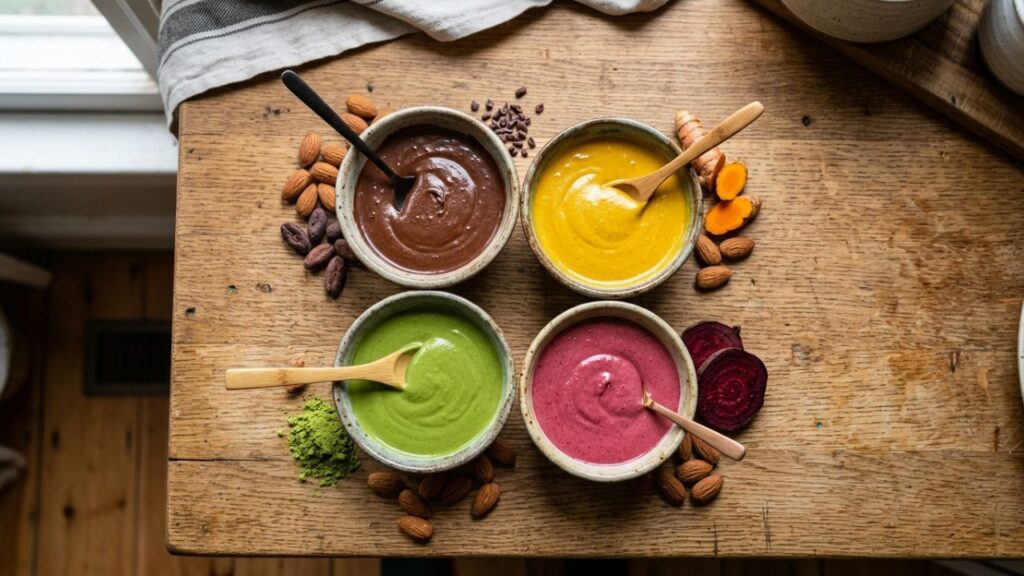
Rainbow nut butter is a multi-colored version of homemade nut butter created by dividing a blended nut base into portions and flavoring each portion differently using natural ingredients. These colored butters are then combined in a single jar in layers or gentle swirls.
Key Ingredients
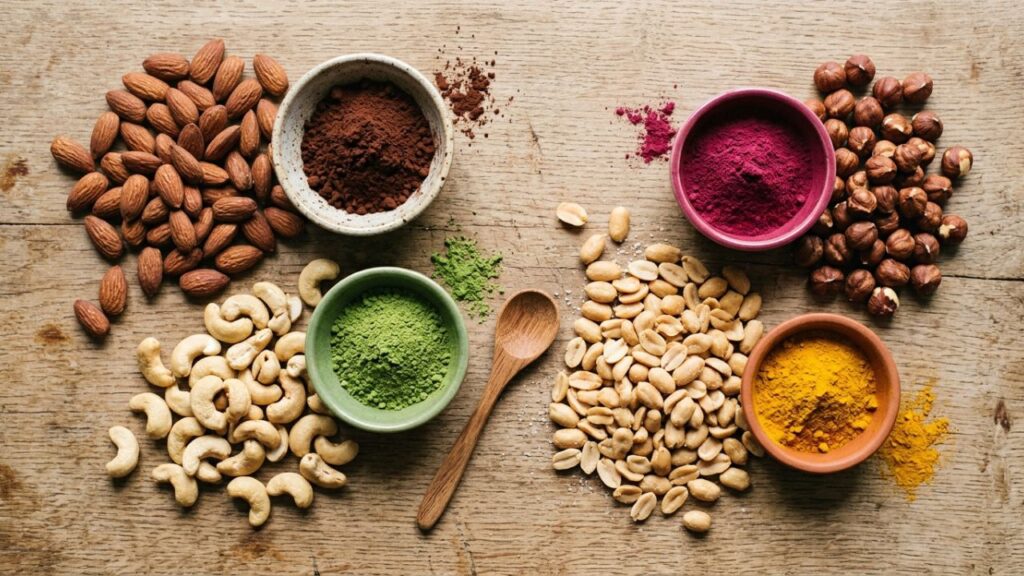
The foundation is always nuts that have been roasted and blended into a smooth paste. Almonds, peanuts, cashews, and hazelnuts are the most common choices because they release oils that help create a creamy texture without needing additives.
Culinary Background
Traditionally, nut butters have been used in many cuisines as a source of energy and richness. The rainbow version is a modern home kitchen interpretation that focuses more on creativity and presentation while still staying rooted in simple, wholesome ingredients.
Flavor Profile
The flavor is usually mild and balanced. The nuts provide richness, while the added ingredients introduce subtle layers that make each bite slightly different from the last.
Why It Works So Well
Flavor Balance
Nut butter itself is already comforting and familiar, so small additions like cocoa or spices enhance rather than overwhelm. Cocoa adds depth, turmeric brings warmth, and matcha introduces earthy notes.
Texture Contrast
Different nuts naturally create slightly different textures. Cashews feel creamy, peanuts are thicker, and almonds sit in between. When layered, these differences create a gentle contrast.
Nutritional Value
Nut butters are naturally rich in healthy fats, plant-based protein, and minerals. Natural colorings like turmeric or beet powder add small antioxidant benefits without changing the core food.
Everyday Use
It fits easily into daily meals, whether spread on toast, stirred into oatmeal, or paired with fruit. It works in both simple and more thoughtful dishes.
Ingredients Guide What to Look For
Nut Quality
Freshness is key. Nuts should smell clean after roasting and not taste bitter or stale. Good quality nuts create a naturally sweet and rich butter.
Choosing the Base Nut
Almonds create a light flavor, cashews are neutral and creamy, peanuts are bold and familiar, and hazelnuts bring a deeper aroma.
Natural Coloring Ingredients
Cocoa powder, turmeric, matcha, and beet powder are commonly used. These should be added lightly so they color the butter without overpowering the taste.
Substitutions
Cinnamon, vanilla, or freeze-dried fruit powders can be used if specialty ingredients are not available. They still add flavor and subtle color.
Seasonal Considerations
Fruit-based colors feel lighter in summer, while cocoa and spice-based versions feel richer in colder months.
Step-by-Step Cooking Method
Roasting the Nuts
Roast the nuts until fragrant and lightly golden. This step builds depth of flavor and improves the final texture.
Blending the Base
Blend the roasted nuts while still slightly warm. They will go from crumbly to thick paste to smooth butter as oils are released.
Dividing the Mixture
Split the smooth nut butter into separate bowls. This allows each portion to be flavored individually.
Adding Color and Flavor
Mix each portion with natural ingredients like cocoa, turmeric, or matcha until evenly colored. Keep flavors subtle and balanced.
Layering the Jar
Spoon the colored butters into a jar in layers. You can keep clean separation or gently swirl for a marbled effect.
Adjusting Texture
If too thick, add a small amount of neutral oil. If too soft, chill briefly before serving.
Serving Suggestions
Everyday Use
Spread it on warm toast for a simple breakfast or snack. The heat of the bread softens the butter slightly, making it more aromatic.
Pairing with Fruit
It pairs well with apples, bananas, and strawberries. The sweetness of fruit balances the richness of the nuts.
Breakfast Bowls
Stir it into oatmeal or yogurt for added creaminess and flavor variation.
Serving for Guests
Serve it on a breakfast board with bread and fruit for a visually appealing spread that feels homemade and thoughtful.
Seasonal or Occasion Variations
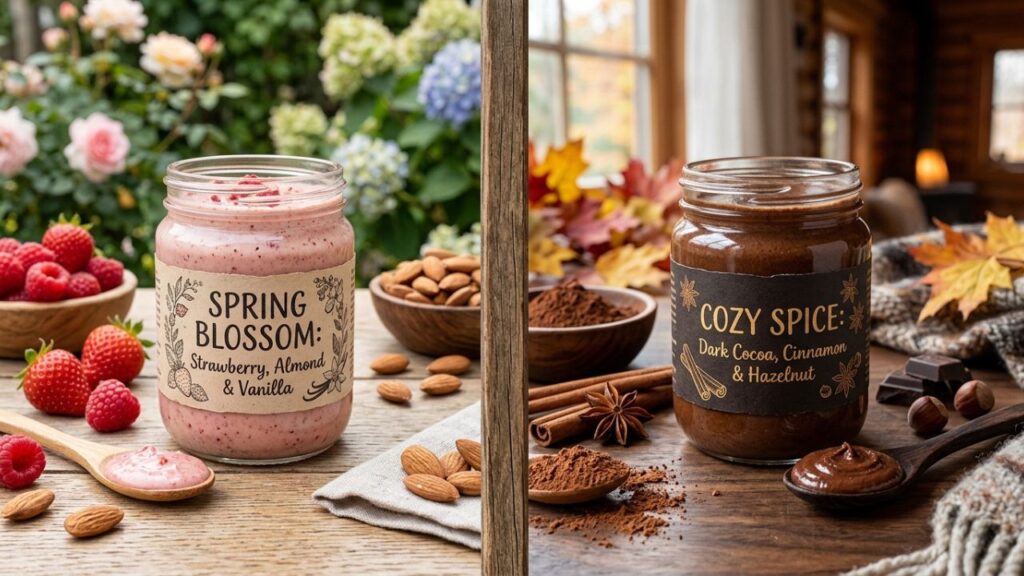
Spring and Summer
Use lighter flavors like fruit powders and soft colors. These feel fresher and pair well with chilled dishes.
Autumn and Winter
Use cocoa, cinnamon, and roasted nut variations for a deeper, warmer flavor profile.
Casual vs Special Occasions
Simple layering works for everyday use, while stronger color contrasts can make it more visually striking for gatherings.
Using Leftovers
Stir into smoothies, spread on pancakes, or mix into warm cereals for quick reuse.
Storage and Reheating Tips
Storage Method
Store in an airtight glass jar to maintain freshness and prevent moisture.
Refrigeration
Keep well in the fridge for up to two to three weeks. Natural oil separation may occur and is normal.
Bringing Back Texture
Let it sit at room temperature before using so it softens naturally.
Food Safety
Always use a clean spoon to avoid contamination and extend shelf life.

Common Mistakes to Avoid
Poor Roasting
Under-roasted nuts lead to weak flavor, while over-roasting creates bitterness.
Rushing the Blend
Stopping too early results in grainy texture instead of smooth butter.
Overpowering Flavors
Too much sweetener or coloring can hide the natural nut flavor.
Overmixing Layers
Mixing too much while layering destroys the rainbow effect.
FAQs
1. Can I make rainbow nut butter without a food processor
Yes, but the texture will be less smooth. A high-powered blender works better for creaminess.
2. Is it suitable for kids
Yes, as long as there are no nut allergies. You can also adjust sweetness based on preference.
3. Do I need natural color powders
No, they are optional. They are mainly used for visual effect.
4. Why does oil separate over time
This is natural in homemade nut butter. Stirring brings it back together.
Conclusion
Rainbow nut butter is a simple but creative way to turn a basic kitchen staple into something more enjoyable and expressive. It does not rely on complicated steps or unusual ingredients, but instead on small thoughtful choices in roasting, blending, and layering. The result is a spread that feels both familiar and new at the same time. It fits easily into daily meals while also adding a small moment of visual joy. Sometimes, that is all good cooking really needs.
About the Author
A home cook and food writer who enjoys creating simple, approachable recipes for everyday kitchens. Their focus is on practical cooking techniques, real ingredients, and recipes that encourage people to enjoy the process of making food at home.