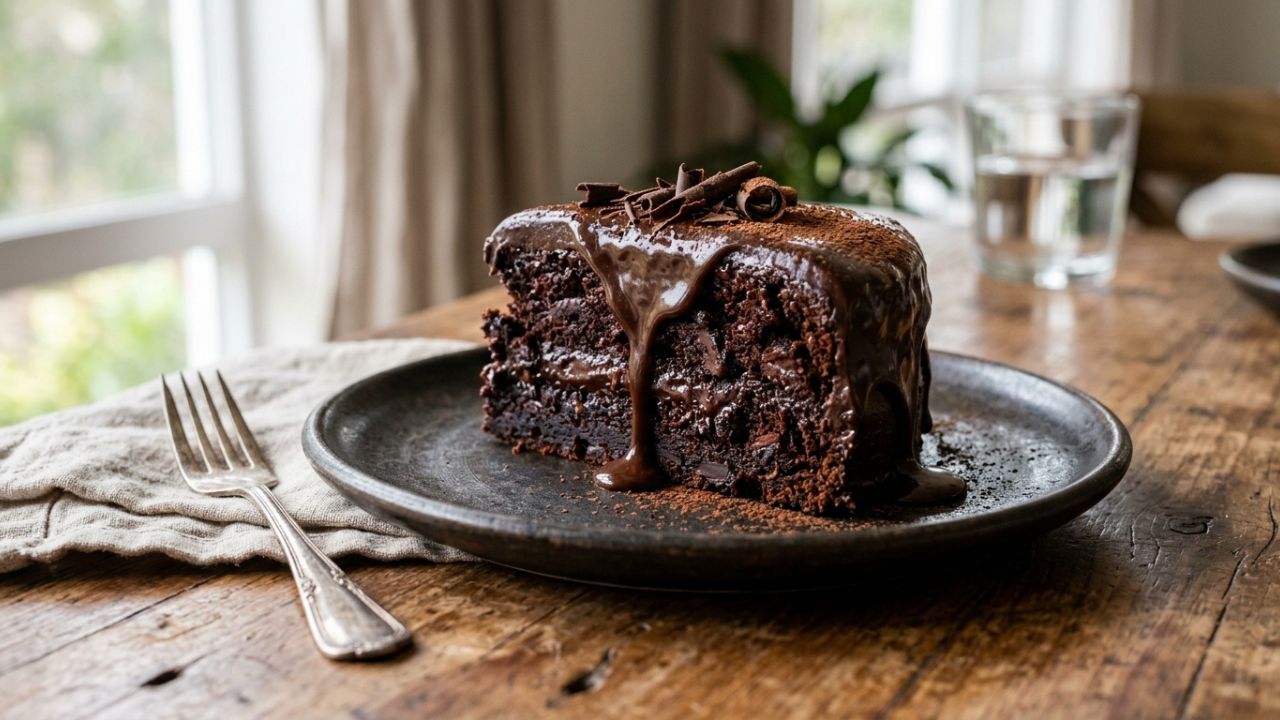
Australian mud cake is one of those quietly impressive desserts that doesn’t need decoration to stand out. It is dense, deeply chocolatey, and wonderfully moist, with a texture closer to fudge or brownie than a light sponge cake. Originating in Australia, it has become a trusted dessert for celebrations, bake sales, and home baking because it holds its shape well and improves in flavor over time. Unlike airy cakes that rely on whipped eggs or delicate folding, mud cake is built for richness and structure. It is the kind of dessert that feels indulgent in a calm, steady way rather than overwhelming sweetness. In my own kitchen, I’ve found that mud cake rewards patience more than precision. Letting it rest overnight changes everything—the crumb tightens slightly, the chocolate deepens, and the texture becomes more unified and satisfying.
What Is an Australian Mud Cake?
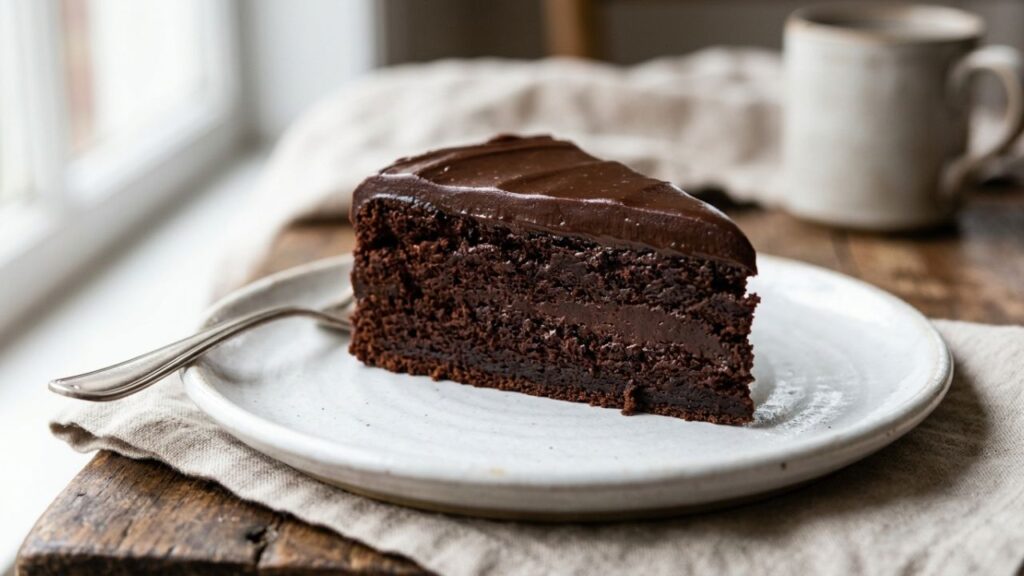
Australian mud cake is a dense chocolate cake known for its moist, compact structure and rich flavor. It is traditionally made using melted chocolate, butter, sugar, eggs, and flour, creating a batter that bakes into a firm yet tender dessert.
Key Ingredients
- Dark chocolate or cocoa powder
- Butter
- Sugar
- Eggs
- Plain flour
- Milk or water
Some variations include coffee, sour cream, or buttermilk to enhance moisture and deepen chocolate flavor.
Culinary Background
Mud cake is commonly associated with Australian home baking culture and bakery-style celebration cakes. Its structural strength makes it suitable for layered cakes and fondant decorations, which is why it is often used for birthdays and events.
Flavor Profile
The flavor is rich, chocolate-forward, and slightly bittersweet depending on the cocoa used. It is not overly sweet, which makes it appealing to those who prefer balanced desserts.
Traditional Method
The signature method involves melting chocolate and butter together, then combining with dry ingredients. This creates a smooth batter and contributes to its signature dense texture.
Why It Works So Well
Balanced Flavor Structure
Mud cake works because it balances multiple flavor elements:
- Sweetness from sugar
- Bitterness from chocolate
- Richness from butter
- Optional acidity from dairy additions
This creates depth rather than flat sweetness.
Texture Experience
The texture is the highlight:
- Dense but not dry
- Moist but structured
- Slight crust outside, soft inside
It sits between a brownie and a traditional chocolate cake.
Cooking Approach
The method itself supports reliability:
- Low baking temperature prevents dryness
- Melted base ensures smooth batter
- Minimal mixing prevents toughness
Everyday Use
Despite its richness, mud cake fits everyday baking because it is simple, forgiving, and holds well for several days.
Australian Mud Cake vs Regular Chocolate Cake (Difference Table)
| Feature | Australian Mud Cake | Regular Chocolate Cake |
| Texture | Dense, fudgy, compact | Light, airy, fluffy |
| Moisture Level | Very moist and rich | Moderately moist |
| Structure | Heavy, firm slices | Soft and delicate |
| Main Technique | Melted butter/chocolate method | Creaming or whipping method |
| Sweetness | Balanced, often less sweet | Usually sweeter |
| Best For | Layer cakes, celebrations, fondant | Everyday desserts, tea cakes |
| Shelf Life | Improves over time | Best consumed fresh |
| Baking Temperature | Low and slow | Medium temperature |
| Mouthfeel | Rich and heavy | Light and soft |
This difference is what makes mud cake unique—it behaves more like a dessert base than a simple sponge cake.
Ingredients Guide – What to Look For
Chocolate Quality
Chocolate defines the cake. Choose one that:
- Melts smoothly
- Has a deep cocoa aroma
- Contains balanced cocoa butter content
Butter and Dairy
Butter adds richness and structure. Always use fresh, unsalted butter for better control of flavor.
Eggs and Flour
Eggs should be room temperature for smooth mixing. Plain flour works best for a stable crumb.
Helpful Additions
- Vanilla extract for aroma
- Coffee for depth
- Salt for balance
Substitutions
- Oil instead of butter for a softer texture
- Cocoa powder instead of chocolate (adjust liquid accordingly)
- Plant-based milk for dairy-free versions
Step-by-Step Cooking Method
Melt Base Ingredients
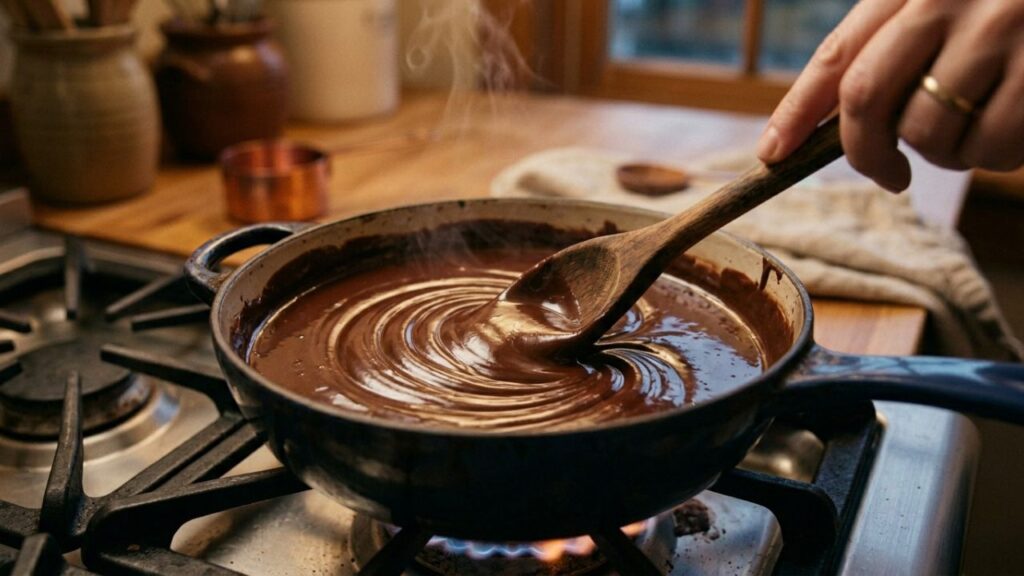
Gently melt butter, chocolate, and milk together over low heat. Stir until smooth and glossy.
Prepare Dry Mix
Sift flour and cocoa powder with a pinch of salt.
Combine Mixtures
Allow the chocolate mixture to cool slightly. Add sugar, then eggs one at a time. Fold in dry ingredients gently.
Bake
- Preheat oven to 160–170°C
- Pour into lined baking tin
- Bake for 60–90 minutes
Check Texture
The cake should be firm on top but slightly soft in the center when gently pressed.
Cooling Stage
Let it cool completely in the pan before removing. This helps set the structure.
Common Issues
- Dry cake: overbaking
- Sunken center: uneven oven temperature
- Dense heaviness: overmixing batter
Optional Variations
- Add chopped nuts
- Swirl in caramel
- Top with ganache
Serving Suggestions
Mud cake is naturally rich, so pairing it thoughtfully improves the experience.
Best Pairings
- Fresh strawberries or raspberries
- Light whipped cream
- Vanilla ice cream
- Black coffee
Presentation Ideas
- Clean, sharp slices
- Light dusting of cocoa powder
- Simple drizzle of chocolate sauce
For Gatherings
- Cut into small squares
- Serve slightly chilled for cleaner edges
- Pair with fruit to balance richness
Seasonal or Occasion Variations
Warm Weather Version
- Add fresh berries
- Serve chilled
- Use lighter cream toppings
Cold Weather Version
- Serve warm slices
- Add spices like cinnamon
- Pair with custard
Celebration Use
Mud cake is ideal for layered cakes due to its firmness. It supports frosting without collapsing.
Leftover Ideas
- Crumble into parfaits
- Use in trifles
- Toast lightly and serve with cream
Storage & Reheating Tips
Storage
- Room temperature: 2–3 days in airtight container
- Refrigerator: up to 7 days
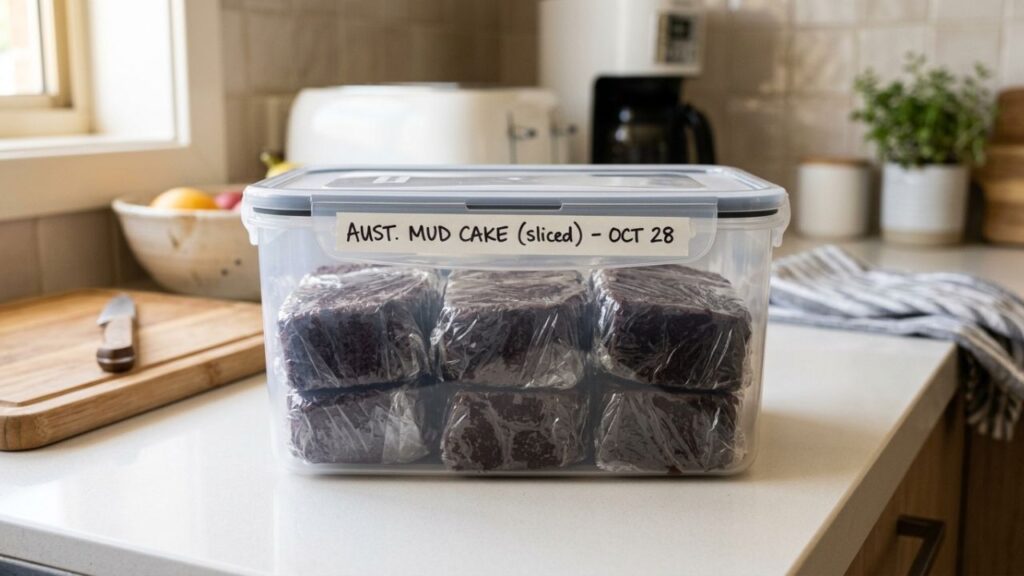
Freezing
Wrap slices individually and freeze for up to 2 months.
Reheating
- Microwave briefly for soft texture
- Let thaw naturally for best flavor
Safety
Always cool completely before storing to avoid moisture buildup.
Common Mistakes to Avoid
Overbaking
Even a few extra minutes can dry out the cake.
Overmixing Batter
This leads to a tough texture instead of a soft crumb.
Wrong Temperature
Too hot = cracked surface
Too low = undercooked center
Skipping Rest Time
Mud cake tastes significantly better after resting.
Poor Ingredient Balance
Too much sugar or flour can ruin the texture balance.
FAQs
1. Why is mud cake so dense?
Because it uses melted fat and minimal aeration, creating a compact structure.
2. Can I make it less sweet?
Yes, reduce sugar slightly or use darker chocolate.
3. Does it need refrigeration?
Not immediately, but refrigeration extends shelf life.
4. Why does it taste better the next day?
The flavors settle and become more unified after resting.
5. Can I freeze it?
Yes, it freezes very well when properly wrapped.
6. Can I make it gluten-free?
Yes, with a suitable gluten-free flour blend.
Conclusion
Australian mud cake is a reminder that simplicity often leads to the most satisfying desserts. Its richness comes not from complexity but from balance—between chocolate, butter, and careful baking technique. It is a cake that respects time. From slow baking to resting overnight, each step builds depth and character. Whether served plain or dressed for celebration, it remains a dependable dessert that feels both comforting and refined.
About the Author
The author is a home cooking enthusiast and food writer who enjoys exploring classic recipes with a practical approach. Their focus is on creating approachable, well-balanced dishes that home bakers can confidently recreate. They believe good food comes from patience, simplicity, and attention to detail.rations like fondant.